
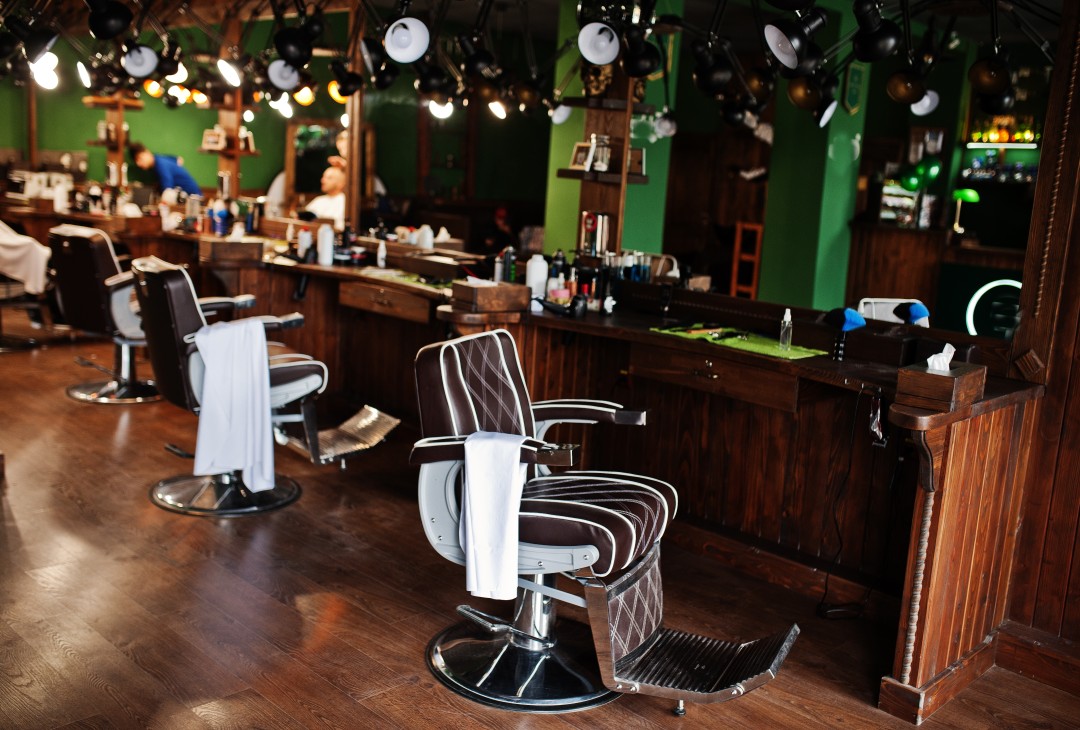
Picture a typical Saturday afternoon in a busy salon. Every chair is full, two hairdryers are running at once, the straighteners have not been switched off since nine o'clock, and the till, the Wi-Fi router and the coffee machine have all been on since before opening. Nobody in the room is thinking about kilowatt hours. But for the person who owns the business, it pays to think about little else. For most hair salons and barbershops, energy is one of the biggest costs you can actually do something about. Rent is fixed. Business rates are fixed. Small business electricity prices are not fixed, and neither is how much energy your salon or barbershop uses to get through the day. Heated tools, bright lighting, hot water on tap and long opening hours all add up quickly, and the last few years have made every one of those units more expensive.
This article sets out what UK hair salons and barbershops typically pay for electricity in 2026, why the bill looks the way it does, and the practical changes that bring it down without affecting the client experience. We will also cover how to get a business electricity quote, so you can find out in a few minutes whether you are paying more than you need to.
Why Hair Salons and Barbershops Use So Much Energy
Compared with most small businesses, salons and barbershops are heavy energy users. A shop selling clothes or books mostly needs lighting and a bit of heating. A salon needs all of that, plus a bank of hairdryers and straighteners running for most of the day, hot water for washing and shaving, heated towel cabinets, and often air conditioning to keep the room comfortable while several heated appliances run at once.
The numbers back this up. A small UK salon typically uses around 7,000 kWh of electricity a year, roughly double what an average UK household uses. A busier salon with five chairs and strong evening trade can use closer to 12,000 kWh a year. Barbershops tend to sit a little lower, but a five-chair shop can still use two to three times the energy of a single-chair setup, once clippers, hairdryers, hot towel cabinets and lighting are all running through a full trading day.
Where the Bill Actually Goes

Figure 1: A typical breakdown of where a hair salon's electricity bill goes across the year.
Lighting is usually the single biggest slice of a salon or barbershop's electricity bill, often making up around 40% of the total. Precision work needs good light, and most premises keep it running for the whole working day. Heating and air conditioning typically account for another 30%, styling tools such as hairdryers, straighteners and clippers around 20%, and the remaining 10% covers hot water, standby power, card machines and background music.
This matters because it tells you where to focus. Lighting and heating run constantly in the background, so small, permanent changes there tend to save more over a year than anything you do with the styling tools themselves.
INDUSTRY SNAPSHOT Recent industry research reported by the National Hair & Beauty Federation found that a significant share of UK hair and beauty businesses are operating at a loss, with rising energy costs among the main pressures. Getting the right electricity rate is not a nice-to-have. For many salons, it is the difference between a healthy margin and none at all. |
Small Business Electricity Prices in 2026: What Salons and Barbers Really Pay
There is no single answer to what you should be paying, because small business electricity prices depend on your usage, your location, your contract length and your meter type. What we can do is set out a realistic range, so you can judge whether your current rate looks fair.
Business size | Typical annual usage | Typical unit rate | Typical standing charge | Estimated annual cost* |
|---|---|---|---|---|
Micro (e.g. 1-chair barbershop) | 3,000 kWh | 29p/kWh | 42p/day | £1,020 |
Small (most salons and barbershops) | 10,000 kWh | 27p/kWh | 46p/day | £2,870 |
Medium (larger salon or small chain) | 25,000 kWh | 26p/kWh | 55p/day | £6,700 |
Large | 45,000 kWh | 24p/kWh | 90p/day | £11,130 |
*Estimated cost before VAT and the Climate Change Levy, based on the typical usage and unit rate shown. Actual bills depend on your supplier, location, contract and meter type.

Figure 2: Average unit rates fall as annual usage rises, which is why smaller salons and barbershops often see higher pence-per-kWh prices than larger sites.
Most independent hair salons and barbershops fall into the small business band in the table above, typically using somewhere between 5,000 and 15,000 kWh a year. It is worth noting that smaller businesses often pay a slightly higher unit rate than larger ones, not because suppliers are penalising small salons specifically, but because bigger customers can negotiate on the strength of bulk usage. That is exactly why comparing business electricity rates matters more, not less, for a small independent business.
To put this in real terms, a three-chair barbershop using around 35 kWh a day, open 26 days a month, on a 30p per kWh tariff, is looking at roughly £270 a month before VAT and the Climate Change Levy, closer to £320 once both are added.
Salon vs Barbershop: A Real-World Cost Example
Salons and barbershops have different equipment mixes, so it helps to see the numbers side by side.
Business type | Typical annual usage | Estimated annual electricity cost* |
|---|---|---|
Small barbershop (1 to 2 chairs) | 4,000 to 6,000 kWh | £1,150 to £1,700 |
Busy barbershop (3 to 5 chairs) | 8,000 to 14,000 kWh | £2,300 to £4,000 |
Small hair salon (up to 4 chairs) | around 7,000 kWh | £1,400 to £1,900 |
Mid-size salon (5 to 8 chairs, evening trade) | around 12,000 kWh | £2,800 to £3,400 |
*Estimates based on typical UK usage and 2026 unit rates, excluding VAT. Your actual cost depends on location, equipment and supplier.
These figures are estimates rather than guarantees, and location makes a real difference too. Businesses in and around London tend to pay noticeably more than those in cities such as Glasgow or Leeds, mainly because network and distribution charges vary by region. The only way to know your actual figure is to compare business electricity rates against your own bill, using your real usage rather than a national average.
How to Get a Business Electricity Quote for Your Salon or Barbershop
Getting a business electricity quote is far simpler than most owners expect, and it does not commit you to switching anything. You are simply finding out what is available.
What You Will Need
Your MPAN, the 21-digit electricity meter number found on a recent bill (sometimes called a Supply Number)
Your annual usage in kWh, taken from a bill or a meter reading
Your current supplier's name and your contract end date
Whether you are on a standard meter or a smart or half-hourly meter
Having this ready means the quotes you get back are based on your real supply rather than a generic estimate, which makes comparing business electricity rates far more accurate.
Why the Timing Matters
If your contract lapses without a new one in place, most suppliers move you onto a deemed or out-of-contract rate. These default rates are set at the supplier's discretion, are not protected by any price cap, and typically sit well above what you would pay on a fixed deal, sometimes ten pence per kWh or more. Ofgem rules mean you can leave a deemed contract at any time without an exit fee once you have a new deal lined up, but it is far cheaper to avoid landing on one in the first place. Aim to start comparing quotes two to three months before your current contract ends.
GOOD TO KNOW Under Ofgem's Energy Switch Guarantee, a completed switch typically takes no more than five working days, and it is scheduled so there is no interruption to your electricity supply on a trading day. |
This is where a free comparison service earns its keep. At SwitchUrEnergy, we compare business electricity rates from a broad panel of UK suppliers, handle the paperwork involved in switching, and keep an eye on the market afterwards so you are not quietly rolled onto an expensive renewal further down the line.
9 Practical Ways to Cut Your Salon or Barbershop's Energy Bill
None of this requires a shop refit. Most of these changes can be made within a week, and several cost nothing at all.
Tip | What to do | Typical saving |
|---|---|---|
Cut standby power | Put dryers, tills, Wi-Fi and speakers on one switched multi-plug and turn it off at closing | Removes a mostly invisible year-round drain |
Upgrade old hairdryers | Swap 2,000W dryers for modern 1,400W brushless models | £80 to £130 a year per bank of dryers |
Switch to LED lighting | Replace halogen or older fluorescent fittings | Up to 80% less lighting energy |
Adjust the thermostat | Drop the temperature by 1°C, set air conditioning to auto and stop heating storerooms | Around 10% off heating and cooling costs |
Service the boiler | Book an annual service and keep a cover plan in place | Recovers efficiency lost over time |
Fit eco showerheads | Install water-saving heads on backwash basins | 40% to 50% less hot water use |
Try disposable towels | Use high-absorbency, single-use towels instead of a wash and tumble-dry cycle | Around £150 a year in laundry electricity for a five-chair salon |
Check your VAT rate | Confirm your daily usage against the de minimis threshold | Possible drop from 20% to 5% VAT (0% on qualifying electricity from October 2026), plus a Climate Change Levy exemption |
Compare before renewal | Get quotes two to three months before your contract ends | Avoids deemed rates, often 10p or more per kWh higher |
Of these, the lighting swap and the standby habit tend to pay back fastest, since both cost little or nothing to put in place and both apply to hours when the salon is not even taking clients. A single evening spent fitting one switched multi-plug, used every night for a year, removes a real chunk of waste from the bill for free.
Fixed, Variable or Deemed: Understanding Your Contract Options
The rate on your bill is only half the story. The type of contract behind it matters just as much.
Contract type | How it works | Best for |
|---|---|---|
Fixed rate | Unit price locked for an agreed term, usually 1 to 4 years | Salons and barbershops that want predictable, budgetable bills |
Variable or flexible | Unit price moves up and down with the wholesale market | Larger or half-hourly metered sites that can manage the risk |
Deemed or out-of-contract | A default rate applied automatically when there is no agreement in place | Nobody, by design. Compare and switch away as soon as possible |
For a business with fairly predictable opening hours, which describes nearly every salon and barbershop, a fixed-rate deal is usually the simplest and safest choice. It will not always be the cheapest rate available on the day you sign, but it protects you from a wholesale price spike partway through the year and makes budgeting for the next twelve months straightforward.
Frequently Asked Questions
What counts as a good business electricity rate for a small salon right now?
In 2026, most small salons and barbershops on a fixed deal are paying somewhere between 22p and 28p per kWh, plus a daily standing charge. If a renewal letter quotes anything close to 35p or more, it is worth getting a comparison quote before you sign.
How much electricity does a typical hair salon use in a year?
A small salon typically uses around 7,000 kWh a year, rising to around 12,000 kWh for a busier five-chair salon with strong evening trade. Barbershops usually use somewhat less, though a busy multi-chair shop can still reach similar figures.
Will switching supplier disrupt a busy trading day?
No. The electricity still arrives down the same wires, and only the billing and account details change. Under Ofgem's Energy Switch Guarantee, a switch is typically completed within five working days once you have agreed a new deal, and suppliers schedule it to avoid any interruption to supply.
Do hairdressers and barbers pay 20% or 5% VAT on electricity?
Most salons pay the standard 20% VAT rate. If your average use is below 33 kWh of electricity a day (around 1,000 kWh a month), you should automatically be moved to the reduced 5% rate and be exempt from the Climate Change Levy. The government announced in July 2026 that this reduced rate will fall further, to 0% on qualifying electricity supplies, for the period from 1 October 2026 to 31 March 2027. This only affects supplies that already qualify for the reduced rate, not standard business electricity, so it is worth checking your bill to see if you qualify.
Is a comparison service like SwitchUrEnergy actually free to use?
Yes. Comparison services are paid a fee by the supplier you eventually switch to, not by you, so getting a business electricity quote costs nothing and comes with no obligation to accept it.
How often should I compare business electricity rates?
At the very least, every time your contract is due to end. Many owners also find it worth a quick check once a year, since rates move often enough that a deal which looked competitive eighteen months ago may not be anymore.
Final Words
Energy is one of the few major costs in a hair or barbershop that you can genuinely influence, week to week and contract to contract. Small habits such as switching off standby power and fitting LED lighting will significantly reduce small business electricity prices. But the single biggest lever is almost always the rate itself. Comparing business electricity rates and getting a proper business electricity quote before your contract renews can be worth more over a year than every other change on this list combined.
If you are not sure what you are currently paying, or a renewal letter has just landed on the doormat, it takes a few minutes to find out whether there is a better deal available. Get a free, no-obligation business electricity quote from SwitchUrEnergy today, and let us do the comparing for you.