
Running a company comes with a myriad of expenses, and utility bills consistently rank among the most significant. If you want to protect your bottom line, securing competitive business gas prices remains essential. The energy market fluctuates constantly, making it difficult for business owners to know whether they are getting a fair deal.
This article breaks down everything you need to know about the current energy landscape. We will explore the factors that drive costs, explain the different types of tariffs available, and compare top commercial suppliers operating in the UK. By the end of this article, you will have a clear roadmap to help you secure the best possible rates, switch providers seamlessly, and optimise your energy usage.
The State of the UK Commercial Energy Market
The UK energy market has experienced unprecedented volatility over the past few years. Wholesale prices shift rapidly due to geopolitical events, supply chain disruptions, and changing weather patterns across Europe. While residential consumers often benefit from the energy price cap, commercial entities do not have this safety net. Organisations must navigate the open market, negotiating contracts directly with suppliers or through energy brokers.
Currently, we are seeing a stabilisation compared to recent historical peaks, but business gas prices remain higher than pre-crisis levels. Suppliers are heavily focused on risk management, which is reflected in the premiums attached to long-term contracts. Understanding these market dynamics is the first step toward making an informed decision for your enterprise.
Factors Influencing Business Gas Prices
When you request a quote for your premises, suppliers do not offer a flat rate. Instead, they calculate your bespoke tariff based on several unique variables. Understanding these factors can help you position your business to secure better terms.
Your Business Location
Your geographical location plays a massive role in the rates you receive. The cost to transport gas through the national grid varies depending on how far your premises are from the distribution centre. Businesses in certain regions will naturally pay slightly higher unit rates or standing charges than those in others.
Energy Consumption and Business Size
Suppliers categorise businesses based on their annual consumption. A large manufacturing plant will command different business gas prices than a small high-street retailer. High-consumption businesses often secure lower unit rates due to economies of scale, though their overall bills and standing charges will be much higher.
Credit Rating
Your company’s credit score directly impacts the tariffs available to you. Suppliers view energy contracts as a form of credit. If your business has a low credit rating or a history of late payments, suppliers may deem you a high-risk customer. They might offer less competitive rates or require a hefty security deposit before agreeing to a contract.
Contract Length
The duration of your agreement influences the pricing structure. A one-year contract might offer lower immediate rates but leaves you exposed to market fluctuations sooner. A three-year or five-year contract provides budget certainty but often includes a risk premium baked into the unit price by the supplier.
Types of Business Gas Tariffs Explained
Choosing the right tariff structure is just as important as finding a low unit rate. Commercial energy contracts operate differently from domestic ones, and you typically have three main options to consider.
Fixed-Rate Tariffs
A fixed-rate tariff locks in your unit price (measured in pence per kWh) and your standing charge for the duration of the contract. It is the most popular choice for UK organisations.
The benefits: You achieve absolute budget certainty. Even if wholesale business gas prices double during your contract term, your unit rate remains identical.
The drawbacks: If wholesale prices drop significantly, you cannot take advantage of the cheaper rates until your contract expires.
Variable-Rate Tariffs
Variable tariffs fluctuate in alignment with wholesale market prices. Your unit rate will rise and fall throughout the year.
The benefits: If the market dips, your bills decrease automatically without you having to switch suppliers.
The drawbacks: You carry all the market risk. Sudden spikes in wholesale business gas prices will immediately impact your operational costs, making financial forecasting incredibly difficult.
Deemed or Out-of-Contract Rates
If your current contract expires and you fail to arrange a new one, your supplier will place you on a deemed rate, sometimes called an out-of-contract tariff. These are notoriously expensive, often significantly higher than negotiated fixed or variable rates. You should avoid these tariffs at all costs by arranging your next contract well before your current one ends.
Comparing Top UK Suppliers for Business Gas
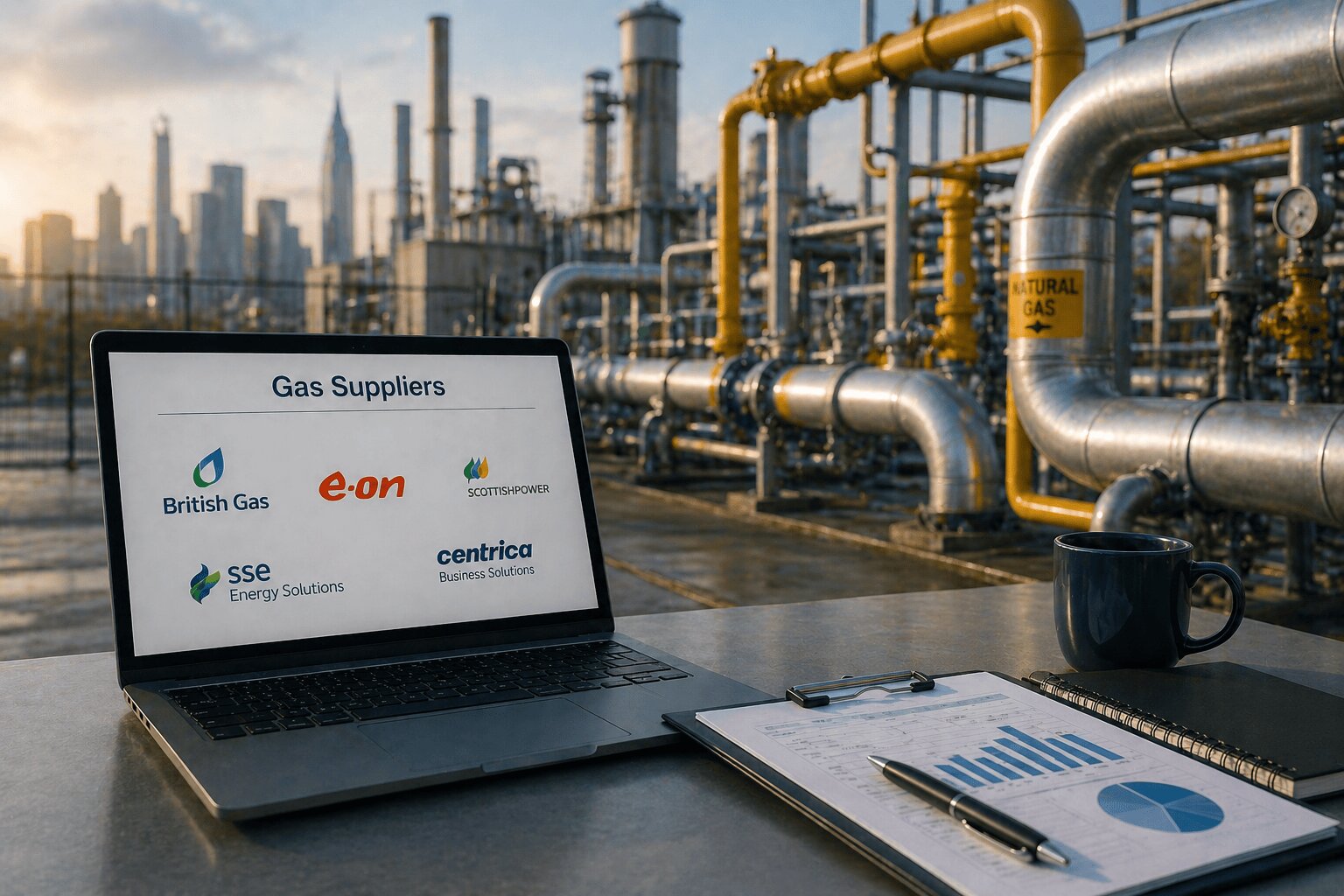
The UK market features dozens of suppliers, ranging from the established "Big Six" to innovative independent providers. Here is a look at three major players and what they offer commercial customers.
British Gas Lite
Designed specifically for small and medium-sized enterprises (SMEs), British Gas Lite operates entirely online. This streamlined approach strips away the overheads associated with call centres, allowing the company to pass the savings on to the consumer.
Pros: Highly competitive business gas prices, smart meters installed as standard, and an intuitive online dashboard for managing your account.
Cons: Customer service is strictly digital via webchat. If you prefer speaking to an account manager over the phone, this supplier may not suit your needs.
SSE (OVO Business)
SSE, now operating its commercial arm under the OVO Business umbrella, remains a heavyweight in the commercial energy sector. They cater to a vast range of clients, from corner shops to industrial complexes.
Pros: Excellent green energy options, robust customer support networks, and tailored contracts for corporate clients with high consumption needs.
Cons: Their standard tariffs for smaller businesses can sometimes be outpriced by agile independent suppliers.
TotalEnergies
TotalEnergies is a massive global player and one of the largest commercial gas suppliers in the UK. They focus heavily on business customers, offering a high level of expertise in commercial energy management.
Pros: Very flexible contract lengths (up to five years), dedicated account managers for larger businesses, and robust online portals for multisite organisations.
Cons: Their credit requirements can be stringent, making it difficult for newly formed startups to secure their best rates.
How to Switch Your Business Gas Supplier
Many business owners believe switching energy providers is a complex, time-consuming chore. In reality, the process is straightforward once you know the steps.
Check Your Renewal Window
You can usually start negotiating a new contract up to six months before your current one ends. Check your exact contract end date and notice period.
Gather Your Details
You will need a recent gas bill. Note down your Annual Quantity (AQ) of gas used, your current supplier, and your Meter Point Reference Number (MPRN).
Compare the Market
Do not simply accept the renewal quote from your current supplier. Use a comparison service or contact suppliers directly to gather multiple quotes. Compare the unit rates, standing charges, and contract lengths.
Sign the New Contract
Once you find the best deal, sign the agreement. Your new supplier will handle the transition, notifying your old supplier and arranging the switch date. You will not experience any disruption to your gas supply during the handover.
Practical Tips to Reduce Energy Consumption
Securing cheap business gas prices is only half the battle. To truly lower your overheads, you must optimise how your organisation consumes energy.
Install a Smart Meter
Smart meters provide real-time data on your energy usage. You can identify exactly when and where you use the most gas, allowing you to implement targeted reduction strategies.
Upgrade Your Boiler
Commercial boilers lose efficiency as they age. An old boiler could be wasting a massive percentage of the gas it consumes. Upgrading to a modern, A-rated model requires an upfront investment but pays for itself through long-term savings.
Improve Insulation
Ensure your premises are adequately insulated. Check for draughts around windows and doors, and ensure pipework is properly lagged to prevent heat loss.
Implement a Smart Heating Schedule
Do not heat empty buildings. Program your thermostats to align exactly with your operating hours. Lowering your overall thermostat by just one degree can cut your heating bills by up to 10%.
Engage Your Staff
Educate your employees on energy-saving practices. Simple habits, such as ensuring windows are closed when the heating is on, collectively make a significant difference.
Final Words
Managing your commercial utility costs requires diligence, timing, and a clear understanding of the market. While business gas prices remain a substantial overhead, you retain the power to negotiate and shop around for the best possible deals.
Take a proactive approach to your energy management. Review your current contract, mark your renewal window on the calendar, and commit to comparing top suppliers like British Gas Lite, SSE, and TotalEnergies before signing a new agreement. By combining a competitive tariff with robust energy-saving practices, you can successfully protect your budget and boost your operational efficiency. Check your current contract end date today, and start gathering quotes to secure your company's financial future.
Do you want protection against the high business gas prices? Just contact us or compare suppliers at our website.