
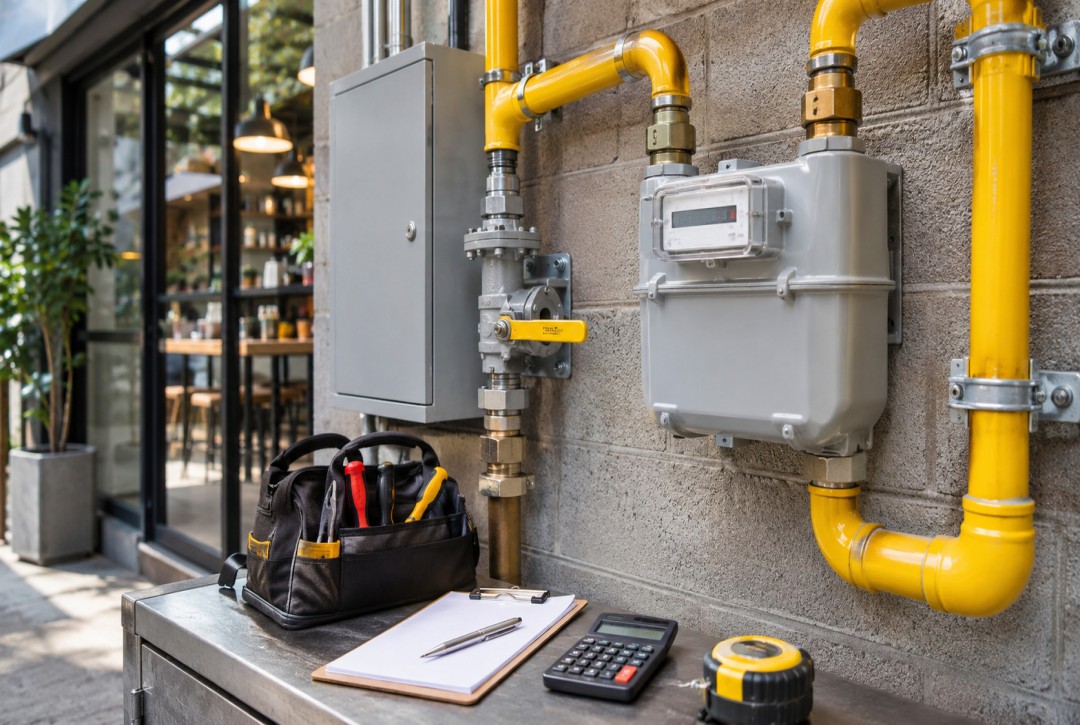
Quick answer: A like-for-like commercial gas meter exchange typically costs £250 to £1,200. Upgrades or new connections that need network work can run from £1,500 to over £6,000. Many small sites can get a smart gas meter free. Meter size, position and who fits it decide where you land.
Picture the week before opening day. The ovens are in, the lease is signed, and then someone asks the question nobody budgeted for: what size gas meter does this unit need, and who is paying for it?
It is a fair worry. A gas meter is more than a box on the wall. It affects how you are billed, which tariffs you can access and, often, how much you pay each day in standing charges. Installation can cost nothing or several thousand pounds, and many guides stop at "it depends".
This guide puts numbers on it. You will find 2026 price ranges, a size-by-size table, worked examples, the 2027 smart meter changes and seven ways to cut costs. We also link your meter to business gas prices and commercial gas prices, because the fitting fee is often smaller than the contract it unlocks.
Note: All figures in this article are indicative, so always get a live quote.
What is a commercial gas meter, and who owns it?
A commercial gas meter measures the gas your premises uses. Your supplier turns that reading into abill using your MPRN, the reference number for your supply point. Our MPRN guide shows how to find yours without a bill.
You rarely own the meter. A meter asset management company usually does, and your supplier pays it rent that feeds into your charges. Any fitting or change must be done by a Gas Safe registered engineer, which is a legal requirement for gas work in the UK.
Which gas meter size does your business need?
Size follows your peak hourly demand, not your annual bill. Our guide to business gas meter types explains the label on your meter. These are the usual bands:
Meter size | Typical peak demand | Typical sites |
|---|---|---|
U6 | Up to 65 kW | Small shops, offices, salons |
U16 | 66 to 173 kW | Takeaways, cafés, small units |
U25 | 174 to 271 kW | Small to medium restaurants |
U40 and above | 272 kW and over | Hotels, laundrettes, industrial sites |
Bands based on Business Energy Deals. A Gas Safe engineer should confirm your sizing.
Bigger is not better. A larger meter generally brings a higher standing charge, so right-size it.
Gas meter installation cost in 2026
There is no single price list, because the job changes everything. This table groups the common jobs.
Job | Typical cost | Notes |
|---|---|---|
Smart (SMETS2) fit, eligible site | Often free | Common for small sites |
Like-for-like exchange | £250 to £1,200+ | Existing supply, same capacity |
Upgrade, relocation or network work | £1,500 to £6,000+ | New pipework, approvals |
New gas connection (home benchmark) | £2,000 to £4,000 | Commercial quotes vary |
Sources: EnergyPlus for exchange and upgrade ranges; MyJobQuote for the connection benchmark, based on home quotes.
Smart gas meter upgrade: often free
Government rules place sites using under 732 MWh of gas a year inside the smart metering mandate. Suppliers must offer microbusinesses a smart meter, with some exceptions. Ofgem counts you as a microbusiness if you use up to 293,000 kWh of gas a year. One supplier's price list shows smart fits on U6 and U16 meters as free of charge. A fitting usually takes about two hours. Check your meter with the Citizens Advice Smart Meter Checker, then ask through Smart Energy GB.
Like-for-like exchange
Replacing a faulty or ageing meter on a live supply, at the same capacity, is the cheap end. Expect £250 to £1,200+ depending on size, access and who does the work.
Upgrade, relocation or a new meter
Adding a kitchen, moving the meter after a refit or raising capacity usually needs pipework and network approval. That is why costs jump to £1,500 to £6,000+.
A brand new connection
No gas at the unit at all? Contact your local gas network operator (there are four, found via the Energy Networks Association) or an independent utility infrastructure provider. Timelines run from about six weeks to over six months, and price depends on distance to the main and the surface to dig through.
Cost by meter size: a real price list
This table uses one supplier's published 2025 list, so treat it as a guide. Every supplier and meter provider sets its own charges.
Meter size | Exchange or install (inc VAT) | Accuracy test (inc VAT) |
|---|---|---|
U6 | £300 | £352 |
U16 | £553 | £466 |
U25 | £647 | £506 |
U40 | £868 | £596 |
U65 | £1,512 | £1,192 |
U100 | £1,707 | £1,237 |
U160 | £1,842 | £1,282 |
Source: Yu Energy 2025 metering charges, traditional (AMR) meters. Smart U6 and U16 fits are free. Accuracy test fees are refunded if the meter proves faulty.

Costs climb steeply above U40. Notice too that an accuracy test can cost more than simply swapping a U6, so test only when you have genuine doubts about your readings.
What pushes your gas meter cost up or down?
Size and pressure. Larger meters and higher-pressure supplies need more equipment and specialist skills.
Position. External meters need protective housing, and larger ones may need a kiosk or concrete base.
Site works. Distance from the main, tarmac or road surfaces and traffic management all add cost.
Timing. On the Yu list, a Sunday or bank holiday visit adds £1,140, and an abort or cancellation fee is £260.
Who fits it. Supplier, independent meter provider and network operator quotes differ, so compare.
How your gas meter links to business gas prices
Your meter and your contract are two halves of one bill. Metering costs are usually folded into your standing charge and unit rate, and one guide puts the standing charge for a U25 site using 100,000 kWh at £1.90 to £4.80 a day.
Then there is the rate itself. Business gas has no Ofgem price cap, so commercial gas prices depend on your contract. In October 2026, MoneySuperMarket reported micro business averages of 8.8p per kWh and a 44.9p daily standing charge. On our gas comparison, ten quotes for a 10,000 kWh site ran from £809 to £1,022 a year before VAT in August 2026, a £213 gap on identical usage.
Add the Climate Change Levy at 0.801p per kWh and VAT at 20%. Sites using up to 145 kWh a day can pay 5% VAT and no levy.
Who pays for the meter? It varies. British Gas says all metering work is chargeable and needs you on its supply contract, while Love Energy Savings says it usually builds the cost into your contract. Ask whether the fee is upfront, waived or spread across the term.
Smart meter changes coming in 2027
The government has confirmed that from 1 January 2027 suppliers must start explaining new rules to non-domestic customers. From 1 September 2027, new fixed-term business energy contracts must include a term saying you have, or will accept, a smart or advanced meter. If you plan to fix next year, expect that clause. Getting a smart gas meter now avoids a scramble, and our UK gas price forecast explains why timing your fix matters too.
Three worked examples
These are illustrative, not quotes.
1. The café with a dial meter.
A café uses 10,000 kWh a year on a U6. It asks for a smart upgrade and is eligible, so the fitting costs £0. At the October averages above, gas costs £880 plus about £164 in standing charges, roughly £1,044 before VAT. Using about 27 kWh a day, it qualifies for 5% VAT, adding about £52.
2. The restaurant adding a kitchen.
Peak demand moves from the U16 to the U25 band. A swap alone is £647 on the price list above. If pipework or capacity must change, plan for £1,500 to £6,000+, so ask for a site survey first. Using panel averages of 8.7p per kWh and 67.3p a day, 60,000 kWh costs about £5,466 before VAT and levy. Shaving 0.5p per kWh off the rate saves £300 a year, or £900 over a three-year fix, which beats the £647 swap.
3. The new unit with no gas.
A retailer takes a unit where the supply was capped. Check whether the MPRN is live, disconnected or removed. The last two usually need network work and sometimes a survey before a meter can go in. Start early, and take a dated opening reading once gas flows, as our new premises checklist explains, to avoid costly deemed rates.
How to get a gas meter installed, step by step

Check your supply status. Use Find My Supplier to confirm your MPRN and whether the supply is live.
Define the job. With a Gas Safe engineer, confirm load and position. British Gas also asks for supply pressure, meter height and input rating, so have them ready.
Request quotes. Ask suppliers, independent meter providers and, for connection work, your network operator.
Agree your gas contract. Most suppliers want a contract before they fit.
Book the visit. Simple jobs can take about five working days after contract, and four to six weeks is common, longer for complex sites.
Take a first reading. Photograph the meter and send the reading to your supplier.
Seven ways to keep gas meter costs down
Ask for a free smart meter first. It may remove the fitting fee altogether.
Right-size the meter. Ask your engineer to calculate peak load so you do not pay for spare capacity.
Get three quotes. Supplier, independent provider and network operator can differ widely.
Fix the meter position early. Moving it after a connection quote usually means a redesign.
Book standard hours and be there. Out-of-hours and abort fees add up.
Ask how costs are recovered. Upfront, waived or built into the rate? Compare the total.
Compare business gas prices before you sign. A small saving per kWh can outweigh the fitting fee, as example 2 shows.
How SwitchUrEnergy helps
SwitchUrEnergy compares commercial gas prices from trusted UK suppliers, including British Gas, EDF, E.ON Next, ScottishPower, TotalEnergies, Utilita and Yu Energy, and handles the switch, typically in two to six weeks. Comparing is free to you because supplier partners pay us when you switch. We show the contract term and any exit fees before you commit.
Have your MPRN and meter size ready and get a gas quote in minutes, or ask our advisers about metering before you sign. Your kitchen or workshop runs on power too, so compare business electricity at the same time.
Frequently Asked Questions (FAQs)
Here are answers to the questions we hear most often.
How much does a commercial gas meter installation cost in the UK?
Roughly £250 to £1,200 for a like-for-like exchange and £1,500 to £6,000+ for upgrades or network work. Eligible small sites can often get a smart meter free.
Is a smart gas meter free for businesses?
Often. Sites under 732 MWh a year are in the smart mandate, and British Gas, for example, says installation is free for eligible businesses. Suppliers must tell microbusinesses about any charge in advance.
Who owns the gas meter at my business?
Usually a meter asset manager, not you or your supplier. A sticker on the meter shows the owner, according to British Gas.
How long does installation take?
A smart fitting takes about two hours once booked. Many suppliers can fit a standard meter within about five working days of agreeing a contract, though four to six weeks is common. New connections run from about six weeks to over six months.
Can an electrician or my landlord fit a commercial gas meter?
No. Gas work must be done by a Gas Safe registered engineer, and British Gas says new commercial supply meters go through a supplier, not a general electrician.
Will a new gas meter change my business gas prices?
The market and your supplier set the rate, but meter size can affect your standing charge and tariff options. Always compare total annual cost, not just the unit rate.
Final Words
A gas meter looks like a small line on a fit-out budget, yet it can cost nothing or thousands of pounds. The pattern is clear. Smart upgrades are often free, exchanges sit in the hundreds, and upgrades and new connections cost the most and take the longest.
Do three things now: find your MPRN, check your meter size and ask about a free smart meter. Then compare commercial gas prices, because the right contract usually matters more than the fitting fee. Get your free gas quote or call (0203) 9500885, Monday to Friday, 9am to 5pm.
This article is general information, not financial advice. Prices change, so check live quotes against your own usage.